SEARCH RESULTS
Search this site
76 results found with an empty search
- This is how brewers make non-alcoholic beer
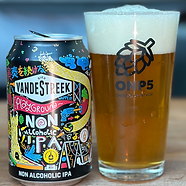
I am now the go-to guy for journalists from newspapers and radio when it comes to their questions about enjoying non-alcoholic beer. Recently it happened again. In one and the same week they called from the NRC (a Dutch newspaper) and the daily newspaper De Limburger. And such a conversation always starts with the question: why is it that non-alcoholic beer has taken off so enormously in recent years? My answer is twofold: that is up to the beer lovers and the brewers. Success factor beer lovers Beer lovers are developing an increasing health awareness. This ensures that they increasingly do not automatically turn to alcohol when they feel like beer. In addition, more and more consumers are opening up to other colours, smells and flavors in beer. Gone are the days when beer should be clear and golden yellow. As a result, countless 'new' beer styles are on the rise, which lend themselves very well to making a non-alcoholic variant. Perhaps even better than the lager that is still the most consumed beer in the world. The 'physical' and the 'biological' method But brewers also contribute to the success of non-alcoholic beer. The technological possibilities for brewing beer that are at least 99.5% free of alcohol have undergone a spectacular development in recent years. Broadly speaking, there are two ways to make non-alcoholic beer: a 'physical' and a 'organic'. Advanced technology In the 'physical' approach, brewers first brew beer with alcohol. They then remove the alcohol using an advanced technological process. In many cases this is done with vacuum distillation. Then the beer only has to be heated to a degree at 35, a temperature at which it does not suffer too much damage. The alcohol evaporates. That is why you saw large breweries hand out free hand sanitizer to healthcare institutions on a large scale last spring, during the first corona lockdown. What the evaporated alcohol leaves behind in taste and character in beer, brewers then have to rebuild in the dealcoholized beer. That is quite a job and a craft in itself. To this end, at Heineken, they first meticulously deconstructed all the odors and flavors in their renowned lager into all chemical components. That may sound a little dubious. But don't forget: although beer has long been a natural and artisanal product, all the delicious smells and flavors are the result of chemical connections. It always has been and always will be, so nothing crazy. The Phoenix What is also possible: a brewery adjusts its beer recipe before it goes into the installation that removes the alcohol from the beer. They use this method in Lieshout at Royal Swinkels Family Brewers. Their installation, the Fenix (the Phoenix), is perhaps the most advanced in the Netherlands at the moment. The image below gives you an impression of the Fenix. This includes Swinkels' 0.0%: if you ask me the best non-alcoholic lager in the Netherlands at the moment. Another example of a 'deacoholised' beer is Sportzot from the De Halve Maan brewery. This family brewery from Bruges uses reverse osmosis to extract alcohol from their famous Belgian blond Brugse Zot. You understand that producing non-alcoholic beer via the 'physical' method is only possible with state of the art technology. A very capital-intensive affair, only reserved for breweries with a lot of money. Only in this way is it possible to make beer that is really 0.0. The installations that brewers use for this are hardly reminiscent of the old brewery trade. They would not look strange in a place like the ports of Antwerp or Rotterdam. That doesn't mean I disapprove of it though. There have always been technological developments and improvements in the brewing profession. The wooden mash tun and stirrer have long since been renounced. And there was a reason for that. A much more interesting question for me as a beer sommelier and enthusiast is: how do brewers make the best beer? Without skimping on quality! Cold fermentation It costs a lot less if a brewery wants to make non-alcoholic beer via what I call the 'organic' method. It is much more artisanal. This approach is close to the way brewing has been done for millennia. The big difference is that brewers work with yeast that produces very little alcohol. In this way, brewers can ensure that no more than 0.3 to 0.5% alcohol is produced in their beer. Fermentation takes place at a very low temperature. Brewers also play with the composition of their recipe. In this way they can ensure that fewer sugars enter the wort, which the yeast converts into alcohol. The yeast strains that brewers use for this were originally known as a by-product of viticulture. But today they are widely cultivated by brewer's yeast producers, especially for low-alcohol beers. You can order them online for a few euros. This means that every homebrewer who works a bit hygienically can brew his own non-alcoholic beer. Great opportunities for 'small' brewers Probably all smaller, independent brewers in the shop of OnderNulPuntVijf use this 'organic' method of cold fermentation. VandeStreek Bier from Utrecht has become successful with it. More than half of their turnover now comes from low-alcohol beers. Which is not surprising, because they are really top of the bill. Have you tried their new Fun House NEIPA yet? More and more beautiful non-alcoholic options are also coming from Belgium that are well worth getting acquainted with. I was positively surprised by Pico Nova from Brussels Beer Project. Finally, a recommendation: the non-alcoholic version of Cornet, from the De Hoorn brewery. With a beautiful generous head and a surprising amount of taste, without the enormous sweetness that is characteristic of this beer with alcohol. It is fair to say that Cornet Oaked Alcohol Free was created with Swinkels technology. More and more beers can be discovered from large and small brewers that are at least 99.5% free of alcohol and that you enjoy drinking. And all developments are far from over. A nice prospect to raise a glass, don't you think? In that sense: cheers!
- Dry January en Alcoholvrij bier
Dry January is becoming more and more popular. We can write a separate blog about why that is. But we regularly get the question whether you can drink alcohol-free beer during your month "without". And the beers we sell are even not completely zero percent in alcohol for the most part. Are you allowed to drink them? The short answer is YES! Dry January is an agreement you make with yourself not to drink alcohol for a month. You have your own reason(s) for that. That could be your health or that you want to sleep better. But losing weight and saving money can also be arguments. The most frequently mentioned reason for participating in Dry January is that you want to break a pattern. You want to be able to say NO to an (unhealthy) habit. Screenshot: NPO3 But that doesn't mean you have to be boring or that you have to drink less tasty drinks. With the rise of many tasty non-alcoholic alternatives, you would be crazy not to discover that world. From my own experience I can report that “below zero point five” fits Dry January perfectly. I myself have not been drinking alcohol for 15 years between Carnival and Easter (say the Catholic version of Dry January). And to be honest: in the beginning I was very principled. I didn't even eat a cherry bonbon and I also declined chicken stewed in wine. I honestly felt guilty when I drank a Palm beer with 0.25% alcohol* in a restaurant. But that Palm did make me think. Less than 0.5% alcohol in a drink still gives all the benefits I strive for with my alcohol-free period (sleep better, lose weight, be able to say no). And this way I have incorporated alcohol-free and low-alcohol beer into my dry period. And that is very nice. What could be against it then? From the organization of IkPas they say about non-alcoholic beer: "we will never actively promote it as an alternative, because you still keep the association with alcohol." To which they follow with: “in moderation and if it helps you to complete your challenge, of course we don't forbid it!” The thought behind this negative attitude is that if you drink alcohol-free beer (or wine, or gin, or… ) you still keep thinking about alcohol. And that is partly true, especially for people who have a serious problem with alcohol. We advocate embracing non-alcoholic beers, also during Dry January On the other hand, non-alcoholic drinks help you cope with a life without (or at least less) alcohol. For example, we see more and more beer geeks who discover alcohol-free beers during the week so that they can continue to check in on Untappd without a hangover. In the meantime, more non-alcoholic beer is drunk on Friday afternoon drinks than beer "with". We therefore argue in favor of embracing non-alcoholic (and low-alcohol) beers, also during Dry January, so that this is an incentive to drink a little lower during the rest of the year. Finally, we would like to say that, despite our differing position with regard to non-alcoholic beer, we wholeheartedly welcome the IkPas initiative. We recommend that if you participate in Dry January that you sign up on their site or download the app. There are several tips and resources that can help you through a dry January. Cheers! *In the beginning Palm Green was 0.25%; now, like so many commercial AF beers, it has become 0.0% and it is called Palm 0.0
- BIG DROP BREWING CO
Big Drop was launched in 2016 as the world’s first brewer dedicated to alcohol-free beer by City lawyer, Rob Fink (right) and long-time friend James Kindred (left). Both had recently become fathers and were looking to cut back on the booze but could not find any decent alternatives to their favourite craft beers. They launched their first beer - an alcohol-free Stout - in November 2016 and then a Pale Ale the following year. Both beers scooped top prizes in beer awards - including ‘World’s Best’ at the World Beer Awards (‘Pine Trail’ Pale Ale has won it twice) and even going on to beat their full-strength rivals in blind-tastings. The AF-only brewer has since produced acclaimed brews spanning every type of beer - from coconut stouts to pastry sours and everything in between. Known for having bolder, hoppier flavours, they have a reputation for thinking outside the box to brew what beer drinkers love. Its unique brew-to-strength method means that each beer goes through a full and natural fermentation cycle, yet never exceeds 0.5% abv. This means all its beers are packed with flavour and, because nothing has to be removed in the process, they don’t have to comprise on taste just because they’re alcohol-free. Big Drop is for everyone who, for whatever reason, wants to enjoy a beer but without the alcohol. They could be driving, looking after kids, pregnant, on a diet, going back to work after lunch, getting up early the next day, training for a triathlon. And to be as inclusive as possible, Big Drop has also made a big effort to be low calorie, gluten-free and Vegan-friendly whenever possible. Rob says: “We sit in the craft beer scene – we’re unashamedly craft and about 80% of our consumers drink alcohol on a regular basis. So, really we seem to scratch an itch that drinkers of craft beer have – that sometimes you just want a great beer, but you don’t want the alcohol.” “We brew our beer naturally to 0.5% ABV, without the need to artificially extract alcohol like most alcohol-free offerings, but that means we’ve had to turn the rules of brewing upside down.” “We’ll be making 4.5 million pints of AF beer this year for consumption around the world, up from just 1,500 when we started in 2016.” “We use a lazy yeast, which isn’t very good at converting sugar to alcohol, as well as brewing at slightly higher temperatures at various points to further inhibit alcohol production. We also use less grain which means there are less sugars available to convert to alcohol, but we use far more types of grain than normal beer which helps amplify the flavour and brings complexity to our beers. We don't just use barley, we use barley, rye, wheat and oats and a number of different varieties of each.” Big Drop can now be found in over 20 countries worldwide – including throughout Europe, Australia, Canada and the US. Covid Context Whilst overall alcohol sales fell in 2020-21, the Pandemic appears to have led to an increase in consumption of low and no alcohol, with retail sales growing 50% year-on-year (Kantar: 52 weeks ending 21 Feb 2021). On this basis and with sales growth of 150%, Big Drop has been outperforming an already fast-growing sector by a factor of three. As you would expect in Lockdown, its retail and direct-to-consumer sales channels went mad whilst the on-trade fell into a state of slumber. Interestingly though that demand has not been dented at all by pubs and restaurants opening-up again, suggesting that the thirst for alcohol-free beer is growing – and particularly for home consumption. As unlikely as it sounds, Big Drop has landed ALL of the major international objectives it made at the start of 2020 - ie before anyone had heard of Coronavirus. It’s now brewing in the US, Canada and Australia – selling nationwide in each of those territories via colossal listings such as LCBO (660 stores) and Dan Murphy’s / BWS (1,100 stores). And it’s not just listings that it’s winning abroad… it’s already been named Brewery of the Year at the Melbourne International Beer Competition and awarded Gold medals at the US Open Beer Championship. With ‘boots on the ground’ in the form of Territory Managers, Big Drop is also having doors opened overseas by board advisors that include Mark Hunter, the former Global CEO of Molson Coors, and Stefan Orlowski, former President Europe of Heineken.
- The Best Beers for B.O.B
“B.O.B”s (Bewust Onbeschonken Bestuurder / Consciously Sober Driver) all over Netherlands really are spoilt for choice on alternatives drinks to alcohol these days. I’ve picked out 5 of the best breweries championing ‘AF in the Lowlands’ and some of their best options. The craft beer scene in the Netherlands has gone from strength to strength in recent years with one category becoming harder to ignore by cicerones, breweries, hospitality, bottle shops and ‘beerfluencers’ alike – alcohol free (AF). Before I get stuck in, I should say there are some notable brewery omissions in the main article who all have at least one option that tickles the tastebuds and is well worth trying; Oedipus, Oersoep, Van Moll, 100 Watt, Jopen and Uiltje to name but a few. We’re inevitably starting in Amsterdam, the Dutch capital and where I call home. It was here that Brothers in Law set up shop in 2010, releasing their 0.5 Hoppy Lager in 2018 which was one of the first AF beers I had in the wild, spotting a shelf full of them at Foodhallen. Recently adding the delicious caramel flavoured, tropical and complex Pacific IPA to their range was a great move - solidifying their commitment to AF beers and providing another luscious option for fans. Brouwerij ‘t IJ can be found just a few canals away and they arguably boast the most recognisable craft label in the Netherlands, with their iconic windmill brewery perched on the banks of the Nieuwevaart the east of the city. It’s fair to say these iconic brewers were a bit late to the game only releasing their first effort in 2020 – better late than never! Kicking off with their fresh and hoppy Free IPA they quickly added the softer and subtler Vrijwit. In my view the latter is a little lacking in flavour but does offer welcome variety to wash down snacks with whilst evading seagull divebombs out on a terrace. Another Amsterdam brewery that captured my imagination upon settling here was Lowlander. Brewed with reclaimed lemon and orange peel from hospitality partners, their sharp 0.0% Wit soon found its’ way into restaurants and bars across the city in the main due to its’ 0.0 appeal. They quickly followed up with four 0.3% options; a Blonde, Lager, Tropical Ale and IPA. The latter is influenced by Sri-Lankan flavours, packed full of mango, cardamom and bitter orange which don’t hide at all in this gorgeously crafted and refreshing brew. It also happens to be my favourite of the bunch. Lowlander are putting a lot of stock into their AFs and it´s paying off. Late last year and early 2021 saw both a shift to cans from bottles and the appearance in one of the top supermarket chains in the UK. Big moves. A short drive west of Amsterdam you will find the picturesque town of Haarlem. I encourage you to take a wander through the cobbled streets and when you do, you’re bound to happen upon the stunning ‘Jopenkerk’ which is home to the Jopen taphouse. This dazzling converted church is undoubtedly the most spectacular of tap rooms I have ever visited. In it you can find the highly successful and now canned Non(netje) IPA which like many other AFs uses a ´lazy yeast´ to keep alcohol conversion down, yet continue to give a full and juicy flavour profile. Their second AF option is a ginger version of this IPA which not only brings a really welcome sharpness and spicy bite to proceedings, but also offers a lovely fresh alternative to the reliable if now slightly saturated AF IPA market. To complete the tour, Bob´s driving south east, swinging past the capital towards Utrecht to find VandeStreek on an industrial park in amongst the car shops, furniture stores and driving schools. Don’t be fooled by the location – this brewery is an absolute diamond and it’s hard to argue they aren’t leading the way with their now world famous (at least in AF circles) Playground IPA. Found in bars, stores and online bottle shops as far away as Australia and winner of the AF Beer Cup in November 2020 it’s widely considered as one of the best across all categories. Through 2020 and into 2021 VandeStreek added to their range introducing a NEIPA, Grapefruit IPA and Sour bringing their non-alcoholic offerings to six in total with more to come over the rest of the year. Recognizable, playful, attractive and most importantly full of flavour – in my view the Playground IPA is the true AF king of the Netherlands… For now. Matt Chauhan - @Guiltfreepints