SEARCH RESULTS
69 results found with an empty search
- How do we keep getting all these new non-alcoholic beers?
We received that question last week. And that's good idea for a new blog post. We're always searching for the latest non-alcoholic beers. For gems you won't find in the supermarket. Because what's more fun than discovering something new every time? Many of our customers feel the same way. You love to taste, look for new surprises, and often check in these beers on Untappd. We sometimes say we're the Jamin of non-alcoholic beer . What they do with candy, we do with non-alcoholic beer . Always searching for something new and special. Read more about how Jamin works here . We are the Jamin among alcohol-free beers From the very beginning in 2020, we saw the need for innovation. That's why we quickly launched the New Beer Subscription: every month (or every other month ) you receive 10 to 12 new non-alcoholic beers at home. This makes a lot of people happy, and we even ship them all over, from Portugal to Sweden. But how do we find all these new beers? We do this in several ways. We follow countless breweries on social media and keep a close eye on new releases. We also get a lot of tips from you, especially after vacations. For instance when someone in Spain or Austria has discovered a unique non-alcoholic beer, they report that to us. And brewers themselves regularly contact us with their latest creations. And if the beer is delicious, we certainly won't say no. In the early years, we drove across the country ourselves to pick up new beers. This even resulted in our own book: Craft Beer . These days, thankfully, breweries usually supply us themselves. And we import foreign non-alcoholic beers together with regular partners. We often get tips about new brews through them as well. We buy the more common beers from wholesalers, primarily for our international customers, who can't find these brands in their own countries. It's always a quest to find something new, but that's precisely what makes it fun. Especially the tasting 😉. And as long as breweries keep innovating, we'll keep surprising you with the tastiest and most unique non-alcoholic beers you can buy. And tips are always welcome. Email them to: info@ondernulpuntvijf.com
- Sober October: origins, benefits, and how to participate
Everyone's familiar with Dry January by now, but did you know that October has its own alcohol-free month? Sober October began as an Australian initiative and grew into a campaign in the United Kingdom to raise money for cancer research. It's now become a global moment to be mindful of alcohol consumption. No lists or finger-wagging, just a refreshing reset at a time when the days are getting shorter and your body could use some extra energy. From Ocsober to a global movement The first time Sober October emerged, it was still called Ocsober . It was organized in Australia to show young people that you can have fun without alcohol. Shortly after, Macmillan Cancer Support in the United Kingdom adopted the idea, under the name Go Sober for October . Participants give up drinking for a month and raise money for people with cancer. This social and community aspect gives the movement extra momentum. These days, Sober October also focuses on personal goals: healthier living, better sleep, or simply reflecting on your relationship with alcohol. Why a month without alcohol is worth it Those who participate often quickly notice a difference. Without alcohol, your sleep pattern improves and you wake up feeling more refreshed. Your skin looks healthier, and by skipping the empty calories of alcohol, you'll lose weight. Many people also experience greater mental peace. You don't have to fight off hangovers, and you have more energy to exercise, read, or simply enjoy your day. These aren't promises that work out exactly the same for everyone, but almost everyone who participates sees benefits that motivate them to stick with it for longer. The social aspect What makes Sober October so much more fun is when you do it together. Friends or colleagues challenging each other, communities sharing experiences, or campaigns connecting participants with a good cause. This not only makes it easier to persevere but also creates a sense of community. While October is normally filled with drinks and dinners, a different kind of conversation suddenly arises: what does it actually feel like to not drink for a while? Alcohol-free is no longer boring One of the reasons Sober October is becoming increasingly popular is the enormous selection of non-alcoholic alternatives. Where you used to have to settle for a standard non-alcoholic pilsner, you can now choose from IPAs, stouts, wheat beers, and even non-alcoholic sours. At ONP5 , that's what it's all about: showing that non-alcoholic beer can be flavorful and surprising. This makes participating in Sober October less of a chore and more of an opportunity to discover something new. Reflection afterwards The beauty of a month without alcohol is that you'll have a better understanding of its effects afterward. You might feel so good that you decide to stay alcohol-free more often. Or perhaps you'll find yourself drinking more mindfully: not automatically, but only when it truly benefits you. In that sense, Sober October isn't just a temporary challenge, but also an opportunity to permanently change your habits. The rise of Sober Curious in the Netherlands In the Netherlands, Sober October is gaining ground, thanks in part to the rise of the so-called Sober Curious movement. More and more people are consciously choosing to abstain from alcohol (temporarily), not because they have to, but because they're curious about the benefits. How do you sleep without alcohol? How do you feel after a few weeks without a drink or glass of wine? It's this curiosity that's driving Sober October's growth in the Netherlands, even though it's not yet as widely organized as in the United Kingdom.
- Non-alcoholic Beer: The Truth Behind 11 Persistent Myths
There are many misconceptions about non-alcoholic beer. Is non-alcoholic beer healthy? Does it make you gain weight? And what about the sugar content? Time to set the record straight and debunk the myths. Myth 1: Drinking a lot of 0.5% beer will get you drunk Fact: The alcohol content is so tiny that your blood alcohol level won’t rise. Your liver breaks it down immediately. You can safely drink non-alcoholic beer without any risk of intoxication or a positive breath test. Myth 2: Non-alcoholic beer makes you fat Fact: Alcohol is the main culprit for weight gain, not beer without alcohol. Alcohol contains 7 kcal per gram (almost as much as fat). A regular 5% beer quickly adds up to 150 kcal. A non-alcoholic beer often has only half that. So: non-alcoholic beer is lower in calories and does not make you fat . Myth 3: Non-alcoholic beer contains a lot of sugar Fact: Non-alcoholic beer typically contains less than 2 grams of sugar per 100 ml. These are residual sugars that haven’t been fermented into alcohol. That’s slightly more than regular beer, which contains virtually no sugar because it’s fully converted into alcohol. But it’s still far less than soft drinks or fruit juice (over 10 g/100 ml). If you’re wondering, “how much sugar is in non-alcoholic beer?” the answer is: usually very little. Myth 4: Non-alcoholic beer has no taste Fact: Modern brewers add extra hops, fruit, or spices to compensate for the absence of alcohol. Today, there are IPAs, wheat beers, stouts, and pilsners that taste almost as good as their alcoholic counterparts. Non-alcoholic beer tastes great – we challenge you to a taste test. Myth 5: Non-alcoholic beer is only for people who can’t handle alcohol Fact: Non-alcoholic beer is enjoyed by a wide range of people: athletes, health-conscious drinkers, foodies, and those who simply want to cut back on alcohol. Many beer sommeliers also appreciate non-alcoholic beer – especially because it’s more technically challenging to brew well. Myth 6: Non-alcoholic beer is just a hype Fact: The market has been growing by double digits for years. Supermarkets and bars are expanding their offerings. Brewers are investing seriously in non-alcoholic options. This isn’t a passing fad – it’s a permanent category. Myth 7: Non-alcoholic beer is only for people who have drunk alcohol before Fact: People who have never drunk alcohol also enjoy non-alcoholic beer. Think of young people, athletes, or those who avoid alcohol for religious or health reasons. It’s a legitimate beverage in its own right. Myth 8: Non-alcoholic beer is only for pregnant women or designated drivers Fact: That image is outdated. Nowadays, people drink non-alcoholic beer because they want to be more mindful with alcohol, start or end an evening more lightly, or simply because they like the taste. Myth 9: You shouldn’t drink non-alcoholic beer after exercising Fact: Quite the opposite. Non-alcoholic beer is often isotonic, which means it quickly replenishes fluids and minerals. Some varieties even contain added magnesium, protein, or vitamins. This makes non-alcoholic beer a good recovery drink after sports. Myth 10: Pregnant women shouldn’t drink non-alcoholic beer Fact: Here we make an exception. During pregnancy, we recommend 0.0% beer . Better safe than sorry. While breastfeeding, beer up to 0.5% is not a problem. If you’re searching “ non-alcoholic beer pregnancy ,” always go for 0.0. Myth 11: Drinking 0.5% beer can cause liver cirrhosis Fact: No. Liver cirrhosis is caused by years of heavy alcohol consumption (daily >20–30 grams of pure alcohol). 100 ml of 0.5% beer contains only 0.4 g of alcohol – a fraction of a normal beer. It’s physically impossible to drink harmful amounts. In short Non-alcoholic beer is full of flavor, for everyone, and fits into a conscious lifestyle. The myths are outdated, and the facts speak for themselves. Whether you’re looking for a low-calorie option, a refreshing IPA, or a 0.0% after sports – there’s always a perfect choice. Do you have a question or dilemma about non-alcoholic beer yourself? Let us know – maybe we’ll dedicate our next blog to it.
- Why there is (still) no alcohol-free brewery in the Netherlands
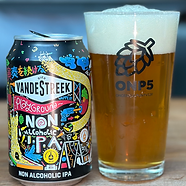
We've been selling non-alcoholic beer* for over five years. During this time, we've noticed one thing: Breweries specializing in non-alcoholic beer are springing up in almost every country around us. Except in the Netherlands. In Belgium, there's Force Majeure , Belgian Balance, God , and Thrive . In Germany, there's Uwe. Switzerland has Zeer Brewing, Denmark has Teedawn, Italy has Freedl , and even Russia has one with Zero Point Brewing. In the US, there's Bravus, Go Brewing, Kit NA, Wellbeing, and, of course, Athletic Brewing , the market leader in this segment. And the UK takes the crown with around ten breweries that brew exclusively non-alcoholic beers. In the Netherlands? Nothing. There used to be Braxzz (2016–2020), known for the world's first completely alcohol-free porter, but that's since disappeared.*** Why does it work elsewhere? The explanation lies in the history of craft beer. Home brewing was legalized in the United States in 1978, which led to the birth of the craft beer revolution in the 1980s. This trend spread to Europe via Great Britain, thanks to cultural and linguistic proximity, as well as an existing pub and ale culture. Scandinavia and the Netherlands followed suit. Belgium and Germany joined later, as their traditional beer cultures offered less scope for experimentation. The pattern is clear: Countries where the craft brewing scene matured early also saw the emergence of the first specialized non-alcoholic breweries. Therefore, the USA and Great Britain are in the lead group. And what about the Netherlands? The fact that there is (still) no non-alcoholic brewery in this country that exclusively serves alcohol has to do with the history of the Dutch beer market. For a long time, it was dominated by a few large players, which limited creativity. However, with the rise of craft beer, there was plenty of room for experimentation, and hundreds of new breweries did just that. This also means that more and more breweries are adding one or more non-alcoholic beers to their range. VandeStreek, with its Playground IPA and Lowlander, were pioneers in this field. With such strong products from existing breweries, the space for a 100% non-alcoholic brewery is limited. Demand is lower because the supply is already there. Why not do it yourself at OnderNulPuntVijf? We're often asked this question. Of course, we know which varieties are popular and what's in demand. But home brewing is a craft in itself: consistency, discipline, and production equipment require a different level of expertise than we have. Furthermore, we don't want to compete with the beers we sell in our shop. We prefer to focus on selecting the best non-alcoholic beers from around the world and making them accessible. Are you planning a non-alcoholic brewery? We'd be happy to accept your beer and advise you. Long story short The fact that there is (still) no brewery in the Netherlands that specializes exclusively in non-alcoholic beer is due to the history of our beer market and the strength of existing breweries that already produce excellent non-alcoholic beers. However, given the developments around us, it is only a matter of time before a dedicated non-alcoholic beer brewery is established in the Netherlands as well. * For simplicity, we count anything up to 0.5% as alcohol-free, although this is formally referred to as “low alcohol.” ** Examples from the UK: Mash Gang , Nirvana, Big Drop , Drop Bear, Below Brew Co, Brulo , Impossibrew, We Can Be Friends. *** In 2023, Mr. Henry was released: a non-alcoholic beer by a Dutchman in Bosnia and Herzegovina. JayJay Boske also released a non-alcoholic beer (with protein) called Beer with Benefits , but it doesn't seem to have a successor.
- How a challenge became an alcohol-free beer empire
Raoul tells us about a simple idea that accidentally turned into an online shop with hundreds of beers, all under 0.5% ABV. It all began with a simple idea. Or rather, an annual, self-imposed challenge. Raoul, born in Maastricht and raised in Brabant, once decided with a friend not to drink alcohol between Carnival and Easter. A refreshing change, he thought. But then again... what do you drink? Instead of just drinking Coke, he went in search of truly delicious non-alcoholic beer. Not standard non-alcoholic beers from the supermarket, but specialty beers that would make your taste buds dance. He scoured the entire country, ordering from obscure online shops abroad, and discovered how limited the selection actually was. Until a friend said, "If you're so passionate about this, why don't you start your own business?" And so, in the living room during the coronavirus pandemic, OnderNulPuntVijf was born : the online shop for lovers of non-alcoholic craft beer. It started with 10 beers and a self-built website. The selection has now grown to over 350 beers. All under 0.5% alcohol, each with its own story. Beer without a hangover Raoul isn't an "anti-alcohol missionary." He simply loves beer. From Palm to Duvel, from Belgian classics to craft beers from all over the world. But after years of tasting, he realized what alcohol does to you: worse sleep, waking up less rested, and those infamous "Why did I do that again?" moments. With non-alcoholic beer, he discovered the best of both worlds: the taste and experience of craft beer, without the drawbacks of alcohol. His first true love began about 10 years ago with a Palm 0.3%. Back then, non-alcoholic beer was more of a curiosity than a trend. Since then, his mission has been clear: to show that a sub-zero beer can be just as exciting, flavorful, and versatile as a non-alcoholic beer. And yes, you could definitely call it "alcohol-free." Because below zero degrees, your body breaks down the alcohol before it even enters your bloodstream. So you can drink all night long without blurry photos or painful memories the next day. Below zero point five? There's more spice in it than you think. There are still many misconceptions about non-alcoholic beer. "It tastes like nothing ," is one of them. Raoul can laugh heartily about that. Quality has exploded in recent years. Small breweries use special yeast strains that produce hardly any alcohol while still preserving all the flavors. Even more remarkable: Beer is often isotonic below zero degrees Celsius . Yes, you read that right: It replenishes fluids and minerals after exercise better than water. In Germany and England, a non-alcoholic beer after a marathon is perfectly normal. This makes Subzero beer not just for drivers or early-morning partygoers. It's for anyone who wants taste without a hangover, and according to Raoul, that makes it a growth market in the beer world. Fridge full of happiness and a laptop as a brewing kettle Anyone who opens Raoul's fridge is transported to craft beer heaven. Every new beer that arrives in the store is the first to be tried. Sometimes out of curiosity for new flavors, sometimes simply because... well, he feels like it. His workspace is less romantic, but just as important: his laptop. From here, he manages everything: inventory management, social media, and the weekly newsletter to over five thousand customers. Because at ONP5, you don't buy an anonymous package. Raoul and his regular crew: Bas, Zoë, Loanna, and Fenna, know their customers. First-time orders receive a warm welcome. Regular customers might even find on the menu: "Here's our taste adventurer again!" Positive, customer-friendly and a bit chaotic Raoul describes himself in three words: "positive" ("My glass is always half full"), "customer-friendly," and "people-oriented." This latter quality is evident not only in his interactions with customers, but also in the relationships he builds with breweries. Take, for example, the Belgian brewer at GOD, who personally drives across the border to deliver supplies. Or the brewer at Pronck in Leiden, who acted as Raoul's lawyer when he ran into trouble with the NVWA (Dutch Food and Consumer Product Safety Authority). But he also admits: Behind the scenes, things can sometimes be quite chaotic. The trunk of his car is silent proof of this. Nevertheless, he manages to present everything customers see, from product photos to flavor descriptions, meticulously and professionally. After all, he tasted and described everything himself. Three beers that sum up Raoul in one sip Ask Raoul for three beers that characterize him as an entrepreneur and as a person, and you'll get a box that almost tells his autobiography. For beginners: La Trappe Epos. A refreshing, non-alcoholic blond Trappist beer, created after Raoul personally collaborated with the brewer on the recipe. For the brave: Sour Flying Dutchman "Freak Kriek." A tart, fresh fruit beer that will awaken your taste buds. Like coffee, but among beers. For those undecided: Whiplash "Never Drink Again" New England IPA. Smooth, fruity, and guaranteed to make you happy with your choice of non-alcoholic beer. Whether you're a beginner, a daredevil, or a doubter, ONP5 always has the right beer for you. With Onder Nul Punt Vijf, Raoul proves that non-alcoholic beer is no longer a boring niche. It's a world full of flavor, experiences, and stories, where hangovers aren't welcome, but conviviality is all the more welcome. Or, as he puts it: "With us, people don't just buy a beer, they buy the experience." And if you find non-alcoholic beer boring: One sip from Raoul's range and you'll be proven wrong. 😉
- Sour is the new bitter: The rise of Sour beer
From someone who thought raspberries belonged only in yogurt and cakes A title we didn't borrow from a brewery, but one that could just as easily have appeared on a chalkboard in a trendy taproom. Sour beer is the sourest child of the craft brewery. Hot, but also ice cold. Expect fruity explosions, sparkling acidity, and a taste that fluctuates between lemonade, white wine, and that first lemon drop you'll never forget. No beer pairs better with sunny patios, overflowing picnic baskets, or anything as crisp as linen. Why? Read on below. With fermentation, yeast, ginger, and a fair amount of flavor confusion. Sour beer: fresh, funky and absolutely contemporary Sour beer isn't a modern trend, but a style with history and character. Lambic and Kriek were already being brewed in Belgium when Pilsner was still considered innovative in the rest of Europe. Today, this classic gets a fresh twist with flavors like mango, cinnamon, blackcurrant, and passion fruit. Anything goes, as long as it's sour and surprising. The magic lies in the microbe: Lactobacillus, for example, or Brettanomyces. What sounds like a forgotten Roman general is actually a wild yeast that sends your taste buds on a wild journey. And all of this results in a crisp, fruity, and tangy beer that doesn't cost the earth. Small story, big comeback Sour beer didn't just happen. In Belgium, brewers simply let their wort (unfermented beer) sit in open vats so that wild yeast could thrive. That would be risky today, but back then, people simply brewed with nature. Later, more adventurous brewers actively pursued this concept: They added raspberries, some wood-aged complexity, and fruits typically found in smoothies... and voilà: the modern sour beer was born. With or without alcohol. The first time is… surprising The first sip of a sour is rarely love at first sight. It's more like: Huh? And then: What is this? And then: Another sip. Because somehow it does something to you. Your tongue dances. Your mind hesitates. You taste lemon, vinegar, peach, and suddenly: Wow. This is good. It's like espresso, sushi or techno: at first you don't understand it, then you can't live without it. Alcohol-free? Then the sourness comes into its own. Acidity gives non-alcoholic beer character. It provides freshness, excitement, and a constantly evolving flavor. Whether citrus, pineapple, ginger, or raspberry: acidity wakes up your mouth. And before you know it, the glass is empty again. What do you drink with it? Sour beer is like a culinary chameleon: It loves to dance with food, preferably in surprising combinations. Don't overthink it. Consider: What would you squeeze a lime on, or what would you serve with a refreshing dressing? Some ideas: Goat cheese or soft Brie pair wonderfully with a slightly tart raspberry or berry sour. The creaminess of the cheese and the crisp acidity of the beer complement each other better than any romantic comedy. Spicy dishes like Thai curry or ceviche? Sour beer softens the spiciness like a lime when enjoyed. Especially with a hint of ginger or citrus in the glass. Something sweet like cheesecake, apple pie, or even vanilla ice cream? That's where the sour note really comes into its own – the contrast is crucial. A sour with peach or cinnamon? Yes, sir! And sometimes... just nothing. Just the beer, cold, in a nice glass. On the balcony. In the sun. And someone next to you asks: "What are you drinking now?!" Who is this mad at? For the curious. For anyone who already enjoys a good glass of wine, a refreshing pilsner, or a robust IPA – and simply wants to try something different. For anyone who isn't afraid of a little adventure in the glass. Or simply: for anyone who wants to rediscover their taste buds. Sour is the new pleasure Sour beer isn't the easiest beer to make, but it's the most surprising! It's a beer that inspires reflection, tasting, wonder, and laughter. It's creative and a little different. Non-alcoholic sours don't even cause a hangover. So the next time someone asks you, "What would you like to drink?", don't say, "Just a beer." Say, "Give me something crazy. Something sour. Something... different." And who knows, maybe you'll be the first to frown and then grin. Cheers! With spout 🍋 Frown at the first sip, smile at the last!
- A fine of €1565 for one mistake. Rightly so?
At ONP5 we sell only non-alcoholic beers. That is not only in our name, but in everything we do. For us, <0.5% alcohol is not a limit, it is a principle. But even with that focus, things can go wrong. And they did. What happened A few months ago we ordered a batch of alcohol-free beers from Czech craft brewery Zichovec. One of those beers — tellingly named “Drink and Oops… Nevermind” — turned out to be 0.8% alcohol upon arrival . The brewer had intended to make an alcohol-free beer, but that did not work out. As a result, this beer did not meet our standard and should actually have been returned immediately. Our choice: return or sell? We were faced with a choice: Sending the beer back to the Czech Republic, with all the associated transport and environmental impact Or sell the beer, with a clear warning that this was the only exception in our range We chose the latter. From a sustainability and transparency perspective. We have clearly stated on the product page that this beer contains 0.8% ABV and is different from our offer. No hidden info, no small print. The offer Because the expiration date was nearly approaching, we have put the beer on sale from March 1st — just like all our beers that are approaching the best before date — with a 50% discount. Not to get rid of it quickly, but to prevent food waste , something we at ONP5 take seriously. Phone call from the NVWA On March 11, we received a phone call from the NVWA ( Dutch Food and Consumer Product Safety Authority) . Based on an anonymous tip, an investigation had been started. The conclusion: we had committed an offense. In the Netherlands, you are not allowed to offer beers with more than 0.5% alcohol with more than 25% discount . The law does not know any exceptions. We immediately took the product offline and stopped selling it. A fine On May 14th we received the report: a fine of €1565 . According to the NVWA this is a “light” fine, considering the fact that our webshop has less than 50 employees. We have exercised the right to comment. In this we explained: that this was a one-off situation and that the product was immediately removed from sale; that we have consciously opted for sustainability and transparency; that we did not knowingly break the law, but simply did what we normally do with near-expired stock. But the fine remained. What do we think about this? In fact, the fine is justified. The law is clear: above 0.5% alcohol, you may not give a discount above 25%. We did that – albeit unconsciously. But in terms of content it feels disproportionate. It was about one beer, one time. We have transparently labeled the product as an exception. We took immediate action when this was brought to our attention. And importantly, there has been no risk to public health. No deception, no large-scale distribution, no campaign with stunt offers. In fact, we tried to prevent food waste by not destroying it unnecessarily. We understand the importance of clear rules, especially around alcohol. But rules must also be applied with common sense and context. As far as we are concerned, a warning would have sufficed . What do you think? Was the NVWA right to impose a fine? Or could this have been done differently? We are curious about your opinion.
- Me myself and IPA - history of the most famous beer
A title we stole from Brouwerij Uiltje. One of the many craft breweries that have ensured that the IPA has made a huge advance in recent years. Also, and perhaps especially, in the alcohol-free beers the IPA is very popular. In our shop alone we sell 86 (June '25) different types. The history of the IPA is a bit of a mystery. The story goes that the Pale Ale from England became increasingly popular in India during the colonization in the 19th century. In order to survive the long boat journey, the brewers added extra hops, which made the beer more bitter and gave the beers a higher alcohol percentage. These Pale Ales for India then also became popular in England itself and are therefore still among the most important beer types to this day. The real, less romantic, story is that the Bow Brewery used India Pale Ale as marketing to (re)conquer the English market in the 1830s. According to the BJCP ( the beer style guide) IPA beer was never even transported to India at that time. The brewery itself went out of business a few years later, but they did ensure that we can still enjoy these bitter beers today. In the meantime, dozens of types of IPAs have been created. Some brewers started adding aromas or using hops that had more flavor to suppress the bitterness. In the US, brewers focused much more on using different types of hops and a proliferation of IPAs emerged. While in England, brewers focused on making the IPA more consistent and better and used a limited number of hops. English IPAs are also generally lower in alcohol percentage. In addition to the American and “original” English IPA, there is now also a Black IPA, Double or Imperial IPA, Triple IPA, New England IPA (NEIPA) and a Session IPA. All variants in which the addition of multiple and different types of hops is varied. They have in common that they all have an IPA bitterness. For the alcohol-free beers, the bitterness of the IPA is very well suited to compensate for the loss of taste due to the alcohol. By adding the extra hops, the beer still gets a full taste. And certainly if you combine this with the addition of aromas of fruit, flowers and/or herbs, you get very nice combinations. A bitter (non-alcoholic) beer takes some getting used to. It's like coffee, the first time you really have to swallow it but after a few tastes you get used to it and you start to appreciate it. And there are a few IPArels among them 😉 Cheers!
- Brewery De Molen ceases operations – but still brews a non-alcoholic beer
Let me get straight to the point: De Molen brewery is closing. It's scheduled to be completed by October 1, 2025. Royal Swinkels, owner of De Molen since 2019, is pulling the plug. The official reason: "The current setup in Bodegraven is no longer profitable." There's a good chance the beers will be brewed elsewhere within the group under the same name, but in any case, it's the end of an era. And what's happening at this once-pioneering brewery at dusk? They're releasing a non-alcoholic beer: Marsh & Mallow . Surprising? Yes. Reason to take a moment and reflect on the history behind this iconic brewery? Certainly. How it all began: a mill, a brewing book and a dream De Molen (the Mill) was founded by Menno Olivier, a homebrewer with a "Great Homebrewing Book" in hand and a homemade system in the attic. What began as a hobby became serious as he built courses and tastings around it. In 2004, he founded his brewery in the De Arkduif grain mill in Bodegraven—a site dating back to 1697 that immediately gave the brewery its name. Menno initially expected little more than a few visitors from the area: "the mayor and an elderly local man," as he put it. But when his beers appeared in the global top 10 of RateBeer.com (the predecessor of Untappd), everything changed. The phone line started ringing off the hook, exports went to 45 countries, and the brewery moved to a larger location. Fortunately, Menno received help from John Brus, who later founded his own brewery: Delftse Brouwers. From independent to industrial branches In 2019, De Molen was fully acquired by the Swinkels family (Bavaria). This meant that its independence and official status as a craft brewery disappeared. Nevertheless, De Molen remained an important place for many beer lovers. The Borefts beer festival organized by the mill is one of the most famous festivals in the world. And fortunately, the Brouwcafé on the Oude Rijn River remains open even after October. Beer, mustard and farewell At this brewery café, you can still enjoy their signature beers—including a growing non-alcoholic selection. Highly recommended: the beer mustard soup. Made with mustard they make from leftover beer (which they also use to make syrup and sambal). According to the bartender, he'll get into trouble with his customers if he ever takes it off the menu. Menno himself has since left De Molen completely. He now lives in Spain, where he founded Menno Olivier Brewing and acquired a stake in La Pirata – a Spanish brewery that also produces remarkably good non-alcoholic beer. At a recent beer festival, he spoke with visible pain about having to watch what was happening to his life's work. And what about the new non-alcoholic beer? Marsh & Mallow. Alcohol-free. Sweet, smooth, slightly malty. Of course we tried it. Because even at the end of an era, a new non-alcoholic beer is cause for reflection—especially when it comes from a name like De Molen. Would you like to try Marsh & Mallow for yourself? You can easily order it from us: www.ondernulpuntvijf.com . Note: This blog is based (in part) on the article Raoul wrote in the book Craft Beer . It's still available for purchase from us.
- The Keeving Method: how to make 0.3% Cider
Cider is a delicious drink with a refreshing, fruity flavor. But did you know there are several different ways to make cider, and some methods are as old as time itself? One such method is the keeving method , an ancient technique that has gained increasing attention in recent years among cider lovers and producers seeking a pure product. In this blog, we'll take a closer look at what exactly the keeving method entails, why it's so special, and how it works perfectly to make cider alcohol-free and preserve its flavor. What is the keeving method? The Keeving Method is a traditional cider-making method that originated in the cider-producing regions of Normandy and Brittany in France. What makes this process unique is that it's a natural process that partially halts the fermentation of apple juice. This is achieved by adding pectin, a substance that occurs naturally in apples and other fruits. Heating apple juice creates a gel-like sludge that deactivates the yeast in the juice or slows the fermentation process. This ensures that the sugar in the juice isn't completely converted to alcohol, resulting in a cider with a lower alcohol content and a sweeter flavor. It's a delicate balance between science and craftsmanship, and the cider maker must know exactly when to stop the process. The Keeving Process The keeving process begins with the harvest of pectin-rich apples, usually certain varieties specifically selected for cider production. The juice is then pressed and slowly heated, causing the pectin in the juice to form a gel. This gel rises to the surface and is removed by the cidermaker along with other impurities created during the process. This results in a clear cider. What happens next is the secret of the Keeving method: The juice is chilled to slow or even (temporarily) stop fermentation. This prevents the yeast from converting all the sugar content into alcohol. Unlike a dry, heavily fermented cider, the apples retain their natural sweetness, resulting in a more balanced and fruity drink. Why is Keeving so special? The keeving method is unique in that it imparts a refined flavor to the cider not often found in commercially produced, fully fermented ciders. Not only does the cider have a lower alcohol content (between 0.3 and 4%), but the apples' natural sugars remain prominently present. This makes the cider pleasantly sweet, yet without feeling overly sticky or heavy. The flavor is fresh and complex, with a subtle fruitiness that really showcases the apples. Furthermore, keeving is a manual process that requires considerable skill and patience. It's not mass production, but rather an artisanal method of cidermaking, where the cidermaker has complete control over the outcome. This often makes keeving ciders special and limited-edition, making them even more appealing to cider lovers. Durable and very low alcohol content What makes the Keeving method truly appealing to many cider lovers is its ability to produce very low alcohol levels , as low as 0.3% (so not completely alcohol-free). This is achieved by stopping fermentation early, before the yeast has converted all the sugar into alcohol. The result is a cider that still retains the rich, fruity flavor of the apples, but with minimal alcohol content. This technique makes it possible to enjoy a refreshing cider without the alcohol, perfect for those seeking a light yet flavorful experience. By controlling fermentation in this way, the cider not only remains less alcoholic, but also sweeter and fresher, without losing any of its flavor. This opens the door to ciders that perfectly meet the modern demand for lighter, lower-alcohol drinks without compromising the traditional cider experience. The future of keeving In recent years, interest in the keeving method has increased significantly worldwide. Many cider producers in France and abroad have rediscovered the process and embraced it for themselves. Brands like Galipette use keeving to produce cider that remains true to the traditional French cider tradition, but with a modern twist. As consumers increasingly seek authentic, artisanal products, the keeving method is the ideal way to produce cider that's not only delicious but also tells a story. It offers an alternative to mass-produced cider, focusing on quality, craftsmanship, and a unique taste experience. Galipette Rosé without alcohol As far as we know, Galipette Rose is the only non-alcoholic cider (0.3%) produced using the keeving method. And you can taste it. The keeving method is a fascinating and authentic process.
- Interview with Teo Musso
Last week I had an interview with Teo Musso, Founder of Birra Baladin. This interview highlights the passion and dedication Teo Musso has for creating innovative, sustainable beers, and how his vision continues to evolve with projects like the non-alcoholic beer. From his early days in the wine region to leading a craft beer revolution in Italy, Teo’s journey has been one of creativity and determination, supported by his son Isaac and his team at Birra Baladin. Raoul van Neer (ONP5): Good afternoon Teo. It’s a pleasure to finally meet you. Teo Musso (Birra Baladin): Hi there, the pleasure is all mine. Raoul: Can you tell us a bit about your background and the history of Birra Baladin? Teo: Absolutely. Birra Baladin was founded 39 years ago in my small village in Italy, located in the heart of the wine region, near Barolo. My family was involved in wine – my father was a grape cultivator and made wine at home. But it was in the early '90s when I started brewing beer, as I saw an opportunity to introduce something different for wine lovers. My focus was on making beer that could be enjoyed alongside wine in restaurants and for wine enthusiasts. Raoul: That's an interesting angle, creating a beer for wine drinkers. How did you evolve from there? Teo: In the beginning, I focused on selling beer to the wine world, especially in wine magazines and restaurants. It was about positioning beer alongside wine. Then in 2006, I began a new project to transform Birra Baladin into a farm, Birrificio Agricolo Baladin. I started cultivating hops in Italy and developed the first Italian beer made entirely with local ingredients. This is also when I introduced craft beer in cans, a new idea at the time. Raoul: That's was revolutionary approach, especially for Italy! And you also ventured into non-alcoholic beer, correct? Teo: Yes, that’s right. In 2020, during the pandemic, I began working on creating a non-alcoholic beer . I didn’t want to use the traditional method for alcohol-free beer, so I focused on microfermentation – a very delicate and small-scale fermentation process. After three years of research, we released the first non-alcoholic craft beer with botanical ingredients and cannabis infusion, which was unique at the time in Italy. Raoul: That’s truly innovative! The addition of cannabis oil and other botanicals must have made it stand out. How did you come to use such unique ingredients? Teo: I wanted to make something surprising and different. The craft beer drinkers in Italy haven’t really explored the non-alcoholic market, so I thought, why not make it more appealing by using cannabis oil and botanicals like chamomile and orange peel? We also developed a special extraction process for these ingredients, using microwaves to create a clean and concentrated flavor. It’s a very unique method for non-alcoholic beer. Raoul: It’s definitely a refreshing taste that stands out from other non-alcoholic beers I’ve tried. Can you tell us more about the collaboration with the University of Turin in developing this beer? Teo: I worked with several universities on this project, including the University of Turin. The focus wasn’t just on non-alcoholic beer, but also on circular economy principles – how to upcycle the waste from beer production. The project involved new techniques for extracting aromas and for dry hopping, which is especially challenging in non-alcoholic beers since they don’t go through the pasteurization process. It’s a delicate balance to maintain clean flavors and aromas in these beers. Raoul: It sounds like a true scientific and creative endeavor. And the yeast – are you using a special strain for your microfermentation process? Teo: Yes, for the microfermentation, I work with two different strains of yeast. We’re constantly experimenting to find the best combination for our non-alcoholic beers. Raoul: That’s fascinating. And what led you to start exploring the non-alcoholic beer category in the first place, given that you already had so many successful beers? Teo: It was driven by my belief that this could be an interesting product for many people. Non-alcoholic beer is appealing for sports enthusiasts, people who are driving, or those who simply want to enjoy a refreshing beer without the alcohol. It’s also part of the growing trend of people looking for healthier options. Raoul: I can see that. What do you envision for the future of non-alcoholic beer at Birra Baladin? Teo: I believe that this part of our production will continue to grow. It may not take over 50% of our output, but I can see it reaching up to 20% in the future. In fact, this year, we’re producing ten times more non-alcoholic beer than last year. And we’re focusing on botanical ingredients, as it’s an area we’re really passionate about. Raoul: That’s impressive! And are these botanicals all cultivated on your farm? Teo: Yes, 95% of the ingredients for our beers are cultivated at Birra Baladin. We focus on clean, sustainable agriculture, and the quality of our ingredients is a cornerstone of our beers. Raoul: That’s amazing! Lastly, Teo, I’ve always loved the story behind the glassware you designed for Birra Baladin. Could you tell us about it? Teo: Of course. In 2006, I collaborated with a designer [ed: Lorenzo “Kuaska” Dabove] to create a special glass for Birra Baladin. It was important to me to have a glass that was not only functional but also elegant for restaurants. The glass needed to represent both the technical aspects of drinking beer and the aesthetic of enjoying it at the table. We were fortunate that it became a huge success. The brand name, TeKu, is prindted in the base of the glass, which became an iconic feature. Raoul: I’ve seen that glass in many places, and it’s such a unique design. Thank you so much for sharing all of this with me today. Let's keep in touch. Teo: We sure will. Thank you and ciao! This interview took place on Wednesday, April 29 2025.
- ONP5 is 5 years old🍻🥳
A brief review... Five years ago, I came up with the idea of opening an online shop for non-alcoholic beer. During my time at ING, I learned that the best way to start a business is to think from the perspective of a customer problem and start small. This "problem" was obvious, as there were (at the time) few tasty non-alcoholic beers available, and I myself abstain from alcohol for a period every year. And I really like good beer. I've written dozens of business plans for other ideas and created one for this concept too. Then I launch a website where I offer five beers. I buy these first beers from another specialty store and present them online with beautiful photos and descriptions. The first order comes from my friend Fred, who continually encourages me to persevere. Orders from friends and family soon follow. After four weeks, I receive my first order from a "stranger" in Enschede—my first real customer! What follows is an exciting and educational journey: the search for good packaging, clever shipping solutions, and, of course, the tastiest beers. I travel all over the country to breweries, which even led to a book about craft beer breweries in collaboration with Mo'Media . After six months, our house is full of crates and boxes of beer, so I'm looking for external storage space. Due to the coronavirus lockdown, a space at the NDSM shipyard in Amsterdam that is normally used for workshops has become available. It's refrigerated, spacious enough to store beers, and ideal for packing orders—with Sam's help. After a few months, the lease expires, and I have to find another location. I find it on Hellingweg in Scheveningen, less than 100 meters from our house. After installing air conditioning (because our beer needs to stay cool in the summer), we're ready to move in. David joins us and is tasked with packing all the orders and continuing to set up the shop. We're continuously developing the online shop, for example, with the introduction of the Advent calendar in 2021 and surprise packages for customers who are having trouble deciding. We're discovering new, delicious beers and, for the first time, importing beers from England and Poland ourselves. It remains a magical moment when I see a pallet full of new beers in front of the warehouse. Then Janine enters the scene. She's just moved from Utrecht to The Hague and is looking for a job. Her question comes just as I'm starting a new interim assignment at Achmea. Together with David, she's continuing to develop the webshop. She makes sure the site looks great, introduces subscriptions, and ensures good communication via social media, Google, and the weekly emails. Customer-focused work is her absolute talent, and this is reflected in the over 200 5-star reviews on Google – we're very proud of that. I continue to take care of purchasing and administration. After two years, Janine is moving to Venlo, and we have to end our collaboration. The (web)shop is now running smoothly, all processes are optimized, and it takes up (relatively) little of my time. Bas has taken over, and with the help of Zoë and Fenna, we're managing to keep the webshop running and make it profitable for the first time (although "running pretty well" is probably a better description). My most important lesson from the last five years is that you shouldn't be afraid of new challenges. From handling transport for beer imports to registering deposits for new cans, anything is doable if you take a moment to consider it. And that only works if you approach it with genuine enthusiasm. I would therefore like to close with the quote from Georg Wilhelm Friedrich Hegel that appears at the end of my CV: “Without passion, nothing great has ever been achieved in the world.”