SEARCH RESULTS
69 results found with an empty search
- The 10 best non-alcoholic beers of the summer
Summer is back and that means time for refreshing drinks and fun moments in the sun. More and more people are opting for non-alcoholic and low-alcohol beers and the range is responding with a wide selection of tasty options. Whether you're lounging on the beach, hosting a barbecue or just enjoying a drink, this list has something for everyone. Here are the top 10 low-alcohol and non-alcoholic beers to try this summer. 1. La Trappe Epic La Trappe Epos is the second non-alcoholic Trappist beer from Brouwerij De Koningshoeven. This beer retains the rich, full flavor profiles we know from traditional La Trappe beers. With a mix of spicy and slightly sweet notes, Epos offers a sophisticated drinking experience (without the alcohol). The amber-colored beer is perfect for craft beer lovers looking for a complex and full-bodied non-alcoholic alternative. Ideal for enjoying a quiet summer afternoon in the garden. 2. Corona Zero Corona Cero is the non-alcoholic version of the legendary Corona beer, known worldwide for its refreshing and light taste. This variant maintains the same characteristic flavor profiles, so you can combine it with a slice of lime for a true summer experience. Whether you're relaxing on the beach or having a party, Corona Cero is an excellent choice for anyone who wants to enjoy summer without alcohol. 3. Mikkeller Drink'in the Sun Danish brewery Mikkeller is known for its innovative and daring beers and Mikkeller Drink'in the Sun is no exception. This low alcohol beer, with just 0.3% alcohol, offers a vibrant blend of fruity and hoppy flavours. It's light and refreshing, making it a great thirst quencher for hot summer days. Drink'in the Sun combines the best of an IPA with the convenience of a low alcohol content, perfect for a day of outdoor activities. 4. Funky Fluid Free Gelato Funky Fluid Free Gelato is a series of 3 beers that are a real treat for the adventurous beer lover. The Polish brewery loves to experiment with flavours and this non-alcoholic beer is inspired by the creamy-sweet flavours of Italian ice cream. The result is a unique combination of fruity and creamy notes that is perfect for summer. Free Gelato comes in Berries & Cream, Bianco (with banana and guava) and Apple Pie (yes, really!) flavours. It is an excellent choice for those who want to try something new and surprising, especially on a sunny afternoon with friends. 5. Bold & Lazy Flacid Flamingo With its eye-catching name and bright color , Vet & Lazy Flacid Flamingo is a beer that attracts attention. This Dutch brewery has created a low-alcohol beer with a fresh taste of raspberries and a hint of citrus. It is lightly fizzy and has a low alcohol content, making it a perfect choice for hot summer days. Whether you are having a picnic or just looking for a refreshing drink, Flacid Flamingo is a must-try. 6. Hirschbier Go Go Ginger Hert Beer Go Go Ginger offers a refreshing touch with its ginger infusion. This low-alcohol beer combines the spicy taste of ginger with a subtle sweetness for a unique and invigorating drinking experience. It is ideal for those who like their beer a little spicier and perfect for summer evenings on the terrace. The balance between the spiciness of the ginger and the smoothness of the beer makes it a favorite among lovers of specialty beer. 7. Star Hunters of the Primordial Soup Oersoep Starchaser is a non-alcoholic beer (actually 0.0) that pushes the boundaries of traditional beer styles. With its fruity and slightly bitter flavor profile, Starchaser offers a complex and refreshing experience that's perfect for summer. This Dutch brewery is known for its innovative brewing approach and Starchaser certainly doesn't disappoint. The beer is a great choice for those looking for something special and unexpected. 8. Lindeboom Governor 0.0 Lindeboom Gouverneur 0.0 is a premium non-alcoholic beer from the Dutch brewery Lindeboom. This beer offers the rich and malty taste you would expect from a traditional Gouverneur beer, but without the alcohol. It has a full body and a pleasant bitterness, making it an excellent choice for beer lovers who want to enjoy an authentic beer experience without the influence of alcohol. Perfect for summer evenings and fun get-togethers. 9. Mule Brewery Careless Sipper The carefree sipper from the Muifel brewery is a unique low-alcohol beer with a surprising flavor profile. It combines tropical fruit notes with a light hop bitterness to create a refreshing and light beer that's perfect for hot days. This creation from the Dutch Muifel brewery is ideal for anyone who wants to try something new and exciting without too much alcohol. Enjoy the flavors of summer while relaxing in the sun. 10. Lowlander – Lemon and Elderflower Finally, the Lowlander Lemon & Elderflower is a refreshing non-alcoholic beer that's perfect for summer. This beer combines the light and citrusy flavors of lemon with the delicate and floral notes of elderflower. The result is a refreshing and tasty drink that's ideal for sunny days. Lowlander is known for its innovative approach to brewing with herbs and botanicals and this creation is a perfect example of their craftsmanship. In fact, all Lowlander beers go well with summer. And you can't choose? Then we have a special summer beer package for you. All you have to do is enjoy! Why choose non-alcoholic and low-alcohol beers? The popularity of non-alcoholic and low-alcohol beers continues to grow, and for good reason. Here are some benefits of these beers: - Health: These beers often contain fewer calories and offer a healthier alternative without sacrificing taste. - Safety: Perfect for those who still have to drive or simply don't want to drink alcohol. - Hydration: An ideal choice to stay hydrated on hot summer days. - Variety: Since there are so many different flavors and styles, there is a beer to suit every taste. Diploma Whether you're looking for something classic like Lindeboom Gouverneur 0.0 or something more exotic like Funky Fluid Free Gelato, there's a world of delicious non-alcoholic and low-alcohol beers to explore this summer. The variety and complexity of these beers proves that you don't have to compromise on taste when opting for a lower alcohol content. Enjoy summer 2024 with these top 10 beers and discover your new favorites. Cheers to a summer full of flavor and refreshment! --- With this list of the 10 tastiest non-alcoholic and low-alcohol beers, you'll be ready to explore summer 2024. Whether you're a fan of the classic flavors or looking for something bold and new, there's something for everyone. Share your favorites with us and let us know which beers will make your summer unforgettable! --- Stay up to date with the latest non-alcoholic beverage trends and reviews by following our blog!
- This is the alcohol-free "Spring Top 10"
In the vibrant spring there is nothing more refreshing than a cool glass of beer, but for those who prefer an alcohol-free option, non-alcoholic beer offers a perfect alternative. What are the best non-alcoholic beers for spring? OnderNulPuntVijf has listed ten for you. 1. La Trappe - Epic Price: €2.25 ABV: 0.0% Epos, the new light blond 0.0% Trappist beer, is the result of the dedication of the monks of La Trappe in Koningshoeven Abbey. This fresh brew is characterized by a generous foam head, a pleasant bitterness and a very refreshing aftertaste. The name 'Epos' has its origins in the Latin word for 'story', often used in ancient times to describe historical events. 2. Lowlander - Lemon & Elderflower Price: €3.50 ABV: 0.3% Made with excess lemons and elderflower, Lowlander's Botanically Brewed Non-Alcoholic Leftover Lemon & Elderflower (0.3%) is a vibrant and refreshing treat. With its refined floral aftertaste and subtle sweetness, this beer is a wonderful example of their commitment to sustainability. The addition of elderflower gives it an invigorating character, while the lemon adds a spicy undertone. At Lowlander they know what to do with surpluses - and this beer proves that. When life gives you lemons, make beer with them! 3. Maisel's - Weisse Price: €1.50 ABV: 0.5% Maisel's Weisse is not just any non-alcoholic Hefeweizen - we believe it is the very best. Carefully selected for its excellent quality and distinctive taste, this beer offers an authentic experience of German weizen beer, brewed according to the Reinheitsgebot. The characteristic aromas and flavors of Maisel's Weisse provide pure pleasure with every sip. Be surprised by the refined balance and rich texture that this beer has to offer. Whether you're a fan of traditional German beers or are simply looking for a refreshing thirst quencher, Maisel's Weisse won't disappoint. 4. Waterland - Billy Bliss Price: €3,- ABV: 0.3% Check out this Billy Bliss, a refreshing low-alcohol blonde ale that is perfect for nice weather. With its subtle hints of nutmeg, coriander and juniper berry, this golden beer is a real delight for the taste buds. With only 0.3% alcohol you can relax without worries and enjoy the organic quality that characterizes all Waterland beers. Discover why Billy Bliss is one of Janine's favorite non-alcoholic blond beers, and pamper yourself with its delicious flavors on sunny days. 5. Thrive-Play Price: €3,- ABV: 0.3% Thrive's non-alcoholic beers are known for their health benefits. This beer contains no added protein, but does provide 10 essential vitamins, such as vitamin D3 and all B vitamins. These vitamins contribute to normal muscle function, energy metabolism, immune system and reduce fatigue. A super sporty beer that you can enjoy daily, ideal for maintaining vitality, especially on hot days or after sun exposure. 6. GOD - Good Old Days Price: €2.50 ABV: 0.2% GOD is an alcohol-free IPA and that is the first in this list. A perfect beer for when you crave a nice dose of hops (because GOD has not been sparing with that). Taste it yourself and get the feeling of the Good Old Days without leaving a hangover. 7. Bax Beer - Kayak Price: €2.75 ABV: 0.5% This second non-alcoholic IPA in the list is from the Bax Bier brewery in Groningen. And the reason it made the list is its incredibly tasty tropical twist. Hazy, fluffy, juicy and drinkable. And if you get bored while sitting with your mouth in the sun on a lovely terrace: scan the QR code on the can and give these brewers feedback. This way your opinion counts towards a new batch. 8. Nepomucen - Free Pan Da Price: €4.25 ABV: 0.5% Discover the sensational Free Pan Da, a delicious pastry sour infused with exotic flavors of mango, passion fruit, orange and yuzu - a Japanese citrus fruit. This extraordinary collaboration between Nepomucen and Deer Bear results in a beer that enchants the senses with its perfectly balanced sweet and sour fruitiness. The addition of lactose gives it a silky texture that makes every sip an unforgettable experience. In our opinion, one of the best non-alcoholic pastry sours out there, perhaps even the best... 9. Kees - Be Wise Price: €2.75 ABV: 0.3% Be Wise marks a milestone for Brouwerij Kees as their very first non-alcoholic beer. This fresh and fruity non-alcoholic Weizen beer, with only 0.3% alcohol, is a wonderful example of Kees Bubberman's craftsmanship. Carefully brewed to preserve the flavors of a traditional Weizen, Be Wise enchants with its vibrant hop notes and subtle fruity notes. A perfect beer for sunny days. 10. Warsteiner - Radler Price: €1.75 ABV: 0.0% Finally . . The Radler should of course not be missing from this list. Warsteiner Radler is a natural and refreshing choice, with an alcohol percentage of 0.0%. This Radler, infused with lemonade and free of colorings and preservatives, is an indispensable companion on hot days. With its sparkling citrus aromas and invigorating taste, this Radler offers the perfect refreshment for a summer day.
- 7 Tips for successful Food Pairings with Non-Alcoholic beer
If you combine beautiful dishes with a nice beer at the table, you discover beautiful things. Beer has flavors and mouthfeel that you will not find in wines. Another advantage of beer over wine as an accompaniment to a meal is often a lower alcohol content. Lately I have noticed that enthusiasts are curious whether you can also combine non-alcoholic beer into food pairings . There is only one answer to that question: absolutely. This article will put you on the right track with tips for successful food pairings with non-alcoholic beer What makes beer gastronomically interesting is that it offers bitter, in addition to sweet and sour, in terms of basic flavors. Beer also contains carbon dioxide. This creates a cleansing effect in the mouth with every sip, so you taste everything much better. The dish and beer must match in intensity There is a basic rule for a successful combination of a beer with a dish: make sure that both match in terms of flavor intensity. Do you have a dish with robust flavors, for example because it is heavily seasoned and/or prepared on the grill? Then choose a beer with distinct flavors. And vice versa: does your dish have softer notes in terms of taste, for example with a salad or with ingredients and preparations with subtler flavors? Then a more subtle beer would also suit that. This applies to both ≤0.5% beer and 'real' beer. I dare say that both have the same range of flavors. The spectrum of alcohol-free is less deep. This has to do with the fact that alcohol cannot be used as a flavor enhancer. Rules of thumb Which flavors combine well is a matter of discovering and trying out. This means that things will go wrong at some point. But you only learn by making mistakes. You can look for combinations that work based on harmony between flavors from a dish and the accompanying beers. You can also look for it in the contrast. In addition, there are a few 'rules of thumb': Bitterness in beer goes well with fats and proteins; Salt in dishes masks bitterness; Bitter enhances spicy and spicy flavors; Acid enhances bitterness in dishes. 7 tips for successful food pairings with non-alcoholic beer I know from experience that your journey of discovery will start more easily if you know where to start. That's why I'm also giving you a few concrete options with which you can start experimenting. Appetizer Light starters or a dish with fried fish can be easily combined with an alcohol-free beer such as that from Swinkels . Do you like boiled mussels? Then drink a Weizen with that. Main dishes There are also excellent combinations for meat dishes with non-alcoholic beers. With a fried sirloin steak or roast pork you should definitely try Sam's Brown Ale . For barbecue fans, there is also an absolute must: Nillis from La Trappe . You can taste smoke accents in its taste. But not only recipes with a lot of meat are suitable for drinking (almost) alcohol-free beer. Spicy and spicy flavors from Indian cuisine combine beautifully with Mango from the Norwegian brewery Lervig . In this beer you will find the rich mango flavor, but it also has something savory at the same time. Desserts There are also options for dessert from the ≤0.5% beer segment that will bring a party to your plate. For desserts with chocolate and cream, I can highly recommend Svart Hvit from the Norwegian brewery Nøgne Ø. Finally, desserts with dairy and red fruit go very well with a non-alcoholic Kriek from the Belgian brewers of Force Majeure. Hopefully these tips will make you want to explore how to combine tasty dishes with nice non-alcoholic beers. The perfect combination is what works best for you. And the best food pairing with non-alcoholic beer has probably yet to be discovered. Do you have a find in this area that would also make other enthusiasts happy? Let us know!
- Can children drink non-alcoholic beer?
“Dad, can I have a non-alcoholic beer?” my 13-year-old daughter asked this week. “Uhhhh.. nice topic for a blog,” was my evasive answer. You can look at this question from a number of angles. “May” has a legal aspect, you can look at it from the health side and from the point of view of education. Legally it is very simple: children are allowed to buy and drink non-alcoholic and low-alcohol beer up to 0.5% ABV. Only from that percentage is it an alcoholic beverage according to the Drinking and Catering Act . You must be 18 years old to purchase or even carry alcohol. But at home, parents set the rules and children are allowed to drink alcohol. Let alone alcohol-free. From a health point of view there are also few problems. Especially for non-alcoholic beer (0.0), it has no influence on the health of the children. Although you have to keep an eye on how much sugar it contains, because it can be higher than a coke. Opinions differ regarding 0.5% beer and wine. In adults there is no health risk at this low percentage, but no research has been done in children. Researchers also do not (yet) know whether drinking non-alcoholic beer by children leads to (more) alcohol consumption later in life. An item from the youth news shows that children think it is cool to drink non-alcoholic beer. "Dad, can I have a non-alcoholic beer?" And now from education. What am I going to tell my daughter? The Trimbos Institute is very clear when it comes to what to do when children drink alcohol. Forbid it and start the conversation. Make sure you don't have much or no alcohol in the house if you have teenagers. This prevents children from drinking a lot later in life. And because my conclusion is that drinking non-alcoholic beer (or wine) leads to a lower threshold for drinking alcohol, I will also not allow her to drink non-alcoholic beer. At least not until she's 16. Sorry Bente.. No cheers!
- Where does that 0.5% come from?
At OnderNulPuntVijf we sell beers up to (and including) 0.5% alcohol. In recent years, that percentage has become a standard for “alcohol-free” beer. But what is that 0.5% based on? The most important basis for a lower alcohol percentage in drinks is legislation. For example, until the end of the 19th century, Gingerbeer was a drink with up to 11% alcohol. Until the British government introduced export taxes on drinks with an alcohol content above 2%. This led to the “standard” alcohol percentage of Gingerbeer being a maximum of 2% worldwide from then on. In the Netherlands there is no reason at all to use 0.5% as a limit. The Commodities Act Decree refers to alcohol-free beer if the alcohol percentage contains a maximum of 0.1% alcohol. That percentage is already present in a ripe banana, for example. The 0.0% stated on non-alcoholic beers is therefore also a rounded percentage. It is virtually impossible to drink so many 0.5 beers that you are no longer allowed to drive In the Netherlands, low-alcohol beer may contain up to 1.2% alcohol according to the same Commodities Act Decree. This corresponds to the percentages used in Italy and France. Although it may be called “non-alcoholic beer” there. Spain is in between again with a percentage of 1%. The European Union also uses 1.2%. Below that, a manufacturer doesn't even have to mention it on the label, although they almost always do. The 0.5% is a percentage that is used as a limit for paying excise duty in countries such as Great Britain, the United States and Germany. And these countries have also set the international standard for non-alcoholic beer. In the US, the term non-alcoholic is used for this. Alcohol-free may only be used here for real 0.0% beers. Perhaps the most important factor for 0.5% as a limit is that the consumer sees it as an acceptable percentage to still be alcohol-free. For example, it is virtually impossible to drink so many 0.5 beers that you are no longer allowed to drive. And after (endurance) sports it is even recommended as a thirst quencher . A higher alcohol content would certainly undermine this claim. And rounded off, Below Zero Point Five (OnderNulPuntVijf) beer is of course simply 0%. Pr0%st!
- Is it Safe to drink Low Alcohol Beer while Pregnant?
There are many things to consider when you are pregnant, including your diet and lifestyle. One of the common questions among pregnant women is whether it is safe to drink low alcohol content beer (less than 0.5%) during pregnancy. Let's delve deeper into this topic and the possible effects of low alcohol beer on pregnancy. 1. Alcohol content : Low alcohol beer has a very low alcohol content of less than 0.5%. This is of course much less than normal beer. Because your body is set to naturally break down alcohol, this effect on your body is very small. And as you may already know, fruit juices sometimes contain a very small percentage of alcohol due to fermentation. And bread and a ripe banana can also contain up to 0.2% alcohol (Halal Wine Cellar). 2. Expert opinions : Although low-alcohol beer is considered safer than higher-alcohol beer, most health experts advise pregnant women to avoid alcohol altogether during pregnancy. This is because there is no known safe consumption of alcohol during pregnancy and avoiding alcohol completely is the best way to minimize potential risks. According to CDC, no amount of alcohol can be said with certainty to be harmless to the (un)born child. The Health Council therefore advises women not to drink alcohol at all if they want to have children, are pregnant or breastfeeding. The American site Parents also advises not to drink alcohol at all. A counterpoint comes from this American study. This says that the minimum alcohol content in low-alcohol beer is considered safe for consumption during the first period (up to 15 weeks) of pregnancy. We don't completely agree with that: better safe than sorry. 3. Social aspects : For some pregnant women, drinking nonalcoholic beer may be a way to continue participating in social activities where alcohol is served, such as parties or dinners. It can help them feel more comfortable and not feel left out because of their pregnancy. The choice between a 0.0 and a low-alcohol beer is then quickly made. 4. Alternative drinks : For pregnant women who are looking for alternatives to low-alcohol beer, there are numerous other drinks that do not contain alcohol. Think non-alcoholic beer (0.0) , non-alcoholic cider , hop water , mocktails, sodas or plain water with a squeeze of lemon or mint for a refreshing touch. 5. Individual circumstances : Every pregnancy is unique and what works for one woman may not work for another. It is important for pregnant women to listen to their own bodies and consult with their doctor about what is best for their individual situation. In summary, although low-alcohol beer has a lower alcohol content than regular beer, it is still recommended that pregnant women remain completely alcohol-free during pregnancy. Avoiding alcohol minimizes the risk of possible complications and is the safest choice for mother and child. If you're pregnant and still want a refreshing drink, consider non-alcoholic alternatives, such as completely non-alcoholic beer or sodas . The most important thing is that you take care of yourself and your growing baby during this special phase of life. Finally, it is also advisable to drink little before pregnancy. Also, or perhaps especially, the fathers. Research shows that drinking alcohol before pregnancy can have an impact on the unborn child.
- Facts and Myths About Non-Alcoholic Beer and Weight Gain
Non-alcoholic beer is rapidly gaining popularity as a healthier alternative to traditional beer. However, many people are concerned that drinking non-alcoholic beer can lead to weight gain. Let's delve deeper into this topic and unravel the facts and myths about non-alcoholic beer in combination with getting fat. 1. Calorie Content : - The first thing people think of when they think of weight gain is calories. The good news is that non-alcoholic beer generally contains fewer calories than regular beer. Since alcohol is the main source of calories in beer, non-alcoholic beer contains significantly fewer calories because it contains no alcohol. An average glass of non-alcoholic beer contains about half the calories of a glass of regular beer, says Free Beer . 2. Sugar content : - Another concern is the sugar content of non-alcoholic beer. Although some brewers add sugar for flavor, most non-alcoholic beers still contain only 50% of the sugar content of soft drinks or fruit juices. The sugar content of non-alcoholic beer varies enormously, from almost 0 grams per 100 ml to 4.0 grams per 100 ml (Gezondheid en Wetenschap). However, it's always a good idea to check the label for added sugars and opt for lower-sugar brands if you're concerned about weight gain. 3. Alcohol and Metabolism : - It is important to note that alcohol itself can have an effect on the body's metabolism. When you consume alcohol, the metabolism of fat is slowed, which can lead to weight gain. Because non-alcoholic beer contains little to no alcohol, it does not have the same effect on metabolism, making it less likely to lead to weight gain. 4. Nutritional value : - Non-alcoholic beer can also provide some nutritional benefits. Some brands add vitamins and minerals, such as B vitamins and antioxidants, to enrich their product. Such a good example of this is Thrive . They also add proteins to help you recover quickly after exercise. These extra nutrients can contribute to a healthier lifestyle and help maintain a healthy weight. An interesting story about nutritional values and non-alcoholic beer has been written by Adda Bjarnadottir, MS. 5. Moderation is Key : - As with everything in a healthy diet, moderation is key. Drinking non-alcoholic or low-alcohol beer in moderate amounts will generally not lead to weight gain. The problem arises when it is consumed in very large quantities along with other high-calorie foods and drinks. 6. Lifestyle Choices : - In addition to drinking non-alcoholic beer, it is also important to consider other aspects of your lifestyle that can affect weight gain, such as diet and exercise. If you're concerned about weight gain, it's important to eat a healthy, balanced diet and get regular exercise. In conclusion, although some people worry that non-alcoholic beer may lead to weight gain, there is little evidence to support this claim. In general, non-alcoholic beer contains fewer calories and sugar than regular beer, and the lack of alcohol means it does not have the same effect on the body's metabolism. Like everything in life, moderation is key, so enjoy non-alcoholic beer as part of a healthy lifestyle and make conscious choices that suit your personal goals and needs.
- Beer in a Can or Bottle - The Great Debate
In earlier times, beer lovers were mainly spoiled with " pipes of beer " that were neatly packed in crates. However, with the rise of craft beers and home brewers, not only the composition of beer recipes has evolved, but also the way we package our beloved barley beer. Canned beer: why? A notable change in this process is the growing popularity of canned beer. More and more breweries are embracing this form of packaging because of various advantages. Tin appears to be perfectly airtight and lighttight It is easier to distribute because of its light weight Contributes to a simpler recycling process. In addition, tin packaging offers unprecedented design possibilities, resulting in beautiful and artistic prints. Can or bottle: can you taste the difference? Research shows that the average beer drinker tastes no difference between beer from a can and beer from a bottle. The difference in experience lies in the way the beer is served: from a bottle or a can into a glass. Either way, the taste remains unchanged. Moreover, a dent in a beer can is no cause for concern these days. In the past there was a risk of rust formation, but thanks to improved metal quality, this is now a thing of the past. Beer in a can, bottle or both Some daring breweries have made the switch to cans entirely. This includes the Zeeland brewery Kees, the American Oskar Blues Brewery, and the Athletic Brewery, which supplies exclusive canned beer. Non-alcoholic breweries have also switched to cans, such as Mash Gang , Brulo andBig Drop . On the other hand, there are also plenty of breweries that only brew beer in bottles , such as the Danish Teedawn . Most breweries have a mix, such as Brouwerij 't IJ , Jopen and Brewdog . Finally, there are also breweries that have an aluminum bottle, such as Heineken andKiss'Wing . Then you have the benefits of a bottle, but still the chills of a can. What does ONP5 think: can or bottle? We are personally more fans of the cans, but that is purely because of the looks. If you have crafty non-alcoholic beer, you just want it to be in a nice can. On the other hand, we are in favor of a tasty bottled lager, which you can drink straight from the bottle. We think you should just drink brands like Corona and Desperados from the bottle, and of course with a slice of lemon. Cans are more convenient when you go to the park or the beach, for example. Can or bottle: every advantage has its disadvantage. But if you still have doubts about canned beer, we challenge you to let go of that image and champion this contemporary form of packaging. It's not about the packaging, but about the unmistakable taste experience that your favorite beer has to offer, regardless of whether it comes from a bottle or can! View all non-alcoholic canned beers here. View all non-alcoholic bottled beers here.
- What exactly is Nitro Stout?
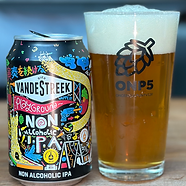
Nitro stout beer has gained significant popularity in recent years, with breweries worldwide experimenting with this unique brewing style. Nitro stout is distinguished by the use of nitrogen (nitro) instead of carbon dioxide (CO2) to carbonate the beer. This results in a creamy texture and a silky mouthfeel. Examples of Nitro Stout are "Hard Pour" from vandeStreek, Guinness and recently also a collaboration between Mash Gang and Siren, the "Call of the Void". The Dutch VandeStreek Bier's "Hard Pour" is temporarily out of stock, but is an intriguing nitro stout that puts an innovative twist on this traditional beer category. VandeStreek's Hard Pour manages to create a lush foam head that slowly sinks into the beer, creating a visually appealing presentation. The taste of Hard Pour is an immersive experience of roasted malts, subtle chocolate notes and a hint of coffee. The nitro effect brings out these flavors in a unique way, taking the beer lover on a journey of complexity and refinement. The mouthfeel is silky soft and creamy, making every sip a pleasure for the senses. As we enter the international nitro stout scene, Guinness is a name that does not go unnoticed. As the pioneer of nitro beer, Guinness has dominated the market for decades with its iconic Guinness Draught. And she has also introduced the Guinness 0.0 some time ago. This Irish beer is known for its smooth, velvety texture and distinctive flavor profile of roasted barley and light bitterness. A fantastic Nitro Stout has also been created from England through the collaboration between Siren and Mash Gang: "Call of the Void". Chocolate, vanilla, Tonka beans and coffee fight for a place on the taste buds. Some even taste a bit of licorice in it. In any case, very complex and (therefore) greatly appreciated. All three beers, the Hard Pour from VandeStreek, Call of the Void from Mash Gang and Guinness Draft, share the core qualities of nitro stout, but differ in nuances of taste and aroma. Where Hard Pour takes a bold approach with its roasted notes, Guinness Draft presents a more balanced profile with subtle bitterness. Mash Gang, on the other hand, looks for the complexity of the different flavors. In conclusion, both VandeStreek's Hard Pour, Call of the Void by Mash Gang and Guinness Draft are compelling nitro stout options for dark beer lovers. Whether you prefer the Dutch innovation of Hard Pour, the timeless elegance of Guinness Draught, or the surprising taste of Mash Gang's Call of the Void, nitro stout remains a fascinating category that continues to evolve and surprise in the world of craft beer.
- What types of non-alcoholic beer are there?
"Do you also have an non alcoholic Saison?" a beer sommelier recently asked me. I had to think very hard and then came to the conclusion that this is about the only beer that does not have an alcohol-free version. For the rest, there is an alcohol-free counterpart for just about every type of beer. There is alcohol-free stout, alcohol-free porter, alcohol-free sour, alcohol-free tripel and of course alcohol-free IPA. The latter type is very common. The most commonly consumed type of non-alcoholic beer is, it will not surprise you, pilsner or lager. It has a light and refreshing taste. It is often brewed using the same ingredients as regular lager, but the alcohol is removed during the brewing process. Non-alcoholic lager is a great choice for classic beer lovers who do not want to drink alcohol. In fact, the large commercial breweries always have an alcohol-free version of their lager. Another popular choice is alcohol-free wheat beer. Wheat beer is known for its fruity and spicy taste. You will of course also find this in the alcohol-free variant. The beer is brewed with wheat, which provides a light and refreshing character. Then herbs, especially coriander and citrus peel, are added, giving the beer a fresh citrusy taste. Non-alcoholic wheat beer is an excellent choice for hot summer days. For dark beer lovers there is also alcohol-free dark beer available. This beer has a rich and full taste, comparable to dark beer with alcohol. It is often brewed with roasted malt, which provides a complex and earthy flavor. Did you know that only about 5% dark malt is needed to give a beer a black color? Non-alcoholic dark beer is a great choice for those looking for a more robust flavor experience. Non-alcoholic dark beers are very popular in our shop. This beer tastes very good, especially when the days are getting shorter. The most common type of alcohol-free craft beer is the IPA . Many breweries use the extra hops in the beer for extra aroma and bitterness, so that an alcohol-free beer retains its original character. The hoppy taste ensures that you can drink a nice non-alcoholic beer without missing anything. Read more about the IPA in our other blog. And as we started this piece, there are many more alcohol-free beer types. We like a nice sour from time to time and an alcohol-free fruit beer is also delicious, especially in the summer. In short, take a look through our different types and put together a nice package. Or let yourself be advised by Janine or Raoul. We are always there for you.
- What is the difference between a porter and a stout?
A stout and a porter are both dark beers with a rich and toasty flavour, but they have some differences in their origins, flavor profile and history. What is the difference between a porter and a stout? And what do they mean by barrel aged stouts? What about non-alcoholic porters and stouts? We tell you all about it. Origin and history Porter: The porter beer originated in 18th century London, England. It was originally a mixture of different types of beer, such as brown ale, pale ale and old beers. Porters were popular with workers and merchants because of their affordability and taste. Naughty: Naughty originated as a stronger version of porters. The name "stout" originally meant "strong" in the context of beer. Stout beers were originally advertised as "stout porters", and they gradually became stronger and more robust than traditional porters. Taste profile Porter: Porters generally have a rich, malty and lightly toasted character. They can display an array of flavors including chocolate, caramel, nuts and sometimes some fruitiness. In general, porters tend to be less alcoholic and less roasted than stouts. Stout: Stouts generally have a deeper roasted flavor and can show notes of coffee, chocolate and even smoke. They can also vary in strength, ranging from lighter dry stouts to heavier imperial stouts with higher alcohol percentages and more intense flavours. Alcohol percentage Porter: Porters usually have a moderate alcohol content, usually ranging from 4% to 6%. Stout: Stouts can have a wide range of alcohol content, ranging from lighter stouts with a lower alcohol content to heavier imperial stouts that can contain 8% or more alcohol. Both variants are also available alcohol-free. Differences Porter: There are different varieties of porters, such as ruby red porters and brown porters, which differ subtly in taste and character. Stout: Stouts also have different variations, including dry stouts, sweet stouts, oatmeal stouts, milk stouts and imperial stouts, each with their own unique characteristics and flavor profiles. Pastry Stout The emergence of the pastry stout is clearly visible. But what is that actually? A "pastry stout," as the name suggests, is a special type of stout beer inspired by sweet and decadent desserts. This beer style is known for using ingredients commonly found in pastries and desserts, such as chocolate, vanilla, coffee, caramel, fruit, nuts, spices, and even cookies or pastries. The purpose of a pastry stout is to recreate the taste and aromas of a dessert in a beer. Other dark beers In addition to porters and stouts, there are many other dark beer styles. Examples are: Oud Bruin, Dubbel beer, Bock, Quadrupel, Black IPA, Schwarzbier, Belgian Strong Dark beer and Scotch Ale. Barrel Aged A "barrel-aged stout" is a special type of stout beer that is aged after the brewing process in wooden barrels, usually barrels that were previously used to store strong alcoholic beverages such as whisky, bourbon, rum or wine. This aging in wooden barrels adds complexity and depth to the taste and aroma of the beer. Here are some characteristics of barrel-aged stouts. Aging in wooden barrels: Barrel-aged stouts are transferred to wooden barrels after primary fermentation. During the maturation process, the beer absorbs the flavors and aromas of the wood and the previous contents of the barrel, such as whisky, bourbon or wine. Enriched flavor profile: The barrel aging gives the stout extra layers of flavor and aroma. You can encounter notes of vanilla, caramel, oak, coconut, smoke, spices and even fruitiness, depending on the type of cask used. Alcohol percentage: Often barrel-aged stouts increase slightly in alcohol percentage during the maturation process. This can vary, but many barrel-aged stouts have a higher alcohol content than unaged stouts. Aging Duration: The duration of aging in barrels can vary widely, from a few months to several years. During this time the beer develops and absorbs the flavors of the wood and the previous contents of the keg. Limited Editions: Barrel-aged stouts are often released in limited quantities due to the complexity of the aging process and the time it takes to perfect the beer. This often makes them highly sought after and collectable beers among beer enthusiasts. Alcohol-free porters and stouts An alcohol-free stout is a variation of the traditional stout beer where the alcohol content has been removed or reduced to a very low level, usually below 0.5% alcohol by volume. This allows the beer to retain its distinctive flavor profile and aromas without the alcohol content normally associated with beer. Non-alcoholic stouts are produced using various techniques to reduce or remove the alcohol content. Some common methods are: Heating and distillation: The beer is gently heated to evaporate the alcohol and then the alcohol is distilled out. However, this can sometimes affect the taste and aromas. Reverse osmosis: Here the beer is filtered through a special membrane to separate the alcohol and other compounds, after which the alcohol-free beer is restored by mixing the resulting concentrate with water. Fermentation stop: Fermentation is stopped early before all sugars have been converted into alcohol, so that the alcohol content remains lower. Dilute: The beer can be diluted with water or other liquids to reduce the alcohol content. Fermentation with non-alcoholic yeast: Some brewers use special yeasts that produce less alcohol during the fermentation process. An alcohol-free stout still has the distinctive flavors of a traditional stout, such as roasted malt, chocolate and coffee-like aromas. However, as alcohol also contributes to the mouthfeel and depth of flavour, an alcohol-free variant may feel slightly thinner in the mouth and subtly differ from the experience of a fully alcoholic stout. Some good non-alcoholic porters and stouts at a glance: Guinness Draft 0.0% Perhaps the most famous Irish stout with its characteristic creamy head, but completely alcohol-free Galea Holy Roasty A low alcohol (0.5%) stout with a nice body where the notes of coffee predominate vandeStreek Hard Pour A nitro stout from Dutch soil with an alcohol percentage of 0.5% You can shake this beer before drinking it to ensure a nice foam head Mash Gang Hand that Feeds Mash Gang varies greatly in assortment, but they release very cool stouts. One of the most famous is the Reign in Blood, with cherry and vanilla. This Hand that Feeds is on the dry side, but still has the recognizable sweet and roasted taste that you expect from a stout Big Drop Galactic Milk Stout A milk stout from English soil with honeycomb and chocolate. Nittenauer Lola To the extent that we currently have in our range, this is the only non-alcoholic (0.5%) porter from Germany with a nice light dry coffee taste. Conclusion Although the lines between stouts and porters have become somewhat blurred over time and there is a lot of overlap in their flavor profiles, these traditional beer styles are still recognized and appreciated by beer enthusiasts around the world. The barrel aging process adds an extra dimension to the character of the stout and can lead to beers with deeper, richer and sometimes surprising flavours. Barrel-aged stouts are popular in the craft beer world for their unique and luxurious profile, but they can also carry higher price tags due to the labor-intensive nature of the aging process. Alcohol-free porters and stouts are also available on the market. Although you then get a slightly lighter body, these beers retain their deep characteristic taste and you are not left with a hangover.
- Dutch Bargain – Designated Dryver x Flammkuchen with fennel and bacon
For Speciaalbierwereld.nl and OnderNulPuntVijf I did a food pairing of a low-alcohol blonde beer and a homemade flammkuchen. The beer I chose for this food pairing was the Designated Dryver from the Dutch Bargain brewery from Zeeuws-Vlaanderen. Tasted and written by… BierMich! Dutch Bargain: About the brewers The beer in this food pairing comes from the Zeeland brewery Dutch Bargain. Dutch Bargain was started by 3 brewers, Marc Menue, Stijn Jordans and Thibo Baccarne, in 2011 in Groede and has since started a mission to give more people the 'craft beer experience 3.0'. The 3 gentlemen seem to be succeeding, because the brewery is growing and has already had to move to larger premises once. Dutch Bargain also refers to the habit of Dutch merchants to seal a closed deal with a joint drink. In the past often with gin, of course, but why not with craft beer? Designated Dryer: About the beer The Designated Dryer is a blond beer with 0.3. If you have a Dry January or you are the Bob, you can enjoy this blond beer. The brewer used water, wheat malt, barley malt, yeast and hops for the brewing and wanted to make the low-alcohol version of the Zeeuws Blond with this beer. I tasted the beer first before pairing it with the food. Below are my tasting notes. Sight: the beer is clear, golden in color and has a short, white head. Smell: The scent is hoppy and fresh with citrus. Taste: This low-alcohol blond ale is a bit sweet and fortunately also has something hoppy with citrus in the taste. Homemade Flammkuchen with fennel & bacon Now the flammkuchen, because I want you to know what I used to put this delicious dish on the table and drink a beer with it. Of course I made a dough with flour, water and yeast and, after the dough had been able to ripen in the fridge for about 20 hours, rolled it out into a round base. On this bottom I spread crème fraîche (with garlic and nutmeg) and then put a mixture of red onion, fennel, olive oil and black pepper on top. Then crispy fried bacon and grated gruyère on top and 5-8 minutes on the pizza stone in my BBQ that was heated to 350 degrees Celsius. Immediately after removing from the BBQ, I sprinkled fresh dill and grated lemon zest on top. The result: a delicious savory flammkuchen with a crispy base and a fresh fennel and lemon flavor in addition to the salty taste of bacon and gruyère. Designated Dryver x Homemade Flammkuchen with fennel & bacon The somewhat sweet taste of the Designated Dryver goes very well with the spicy and salty flavors of the flammkuchen. The fresher hop notes, although not overly present in the taste of the beer, are of course well balanced with the flammkuchen, because it also has some fresh flavors of the fennel, dill and lemon. A nice pairing that gives the Designated Driver more 'bite' and gives enough credit to the flammkuchen. Until the next! Want to read more reviews about specialty beer? Take a look at the Speciaalbierwereld.nl! Or check out all blond beers here at OnderNulPuntVijf!